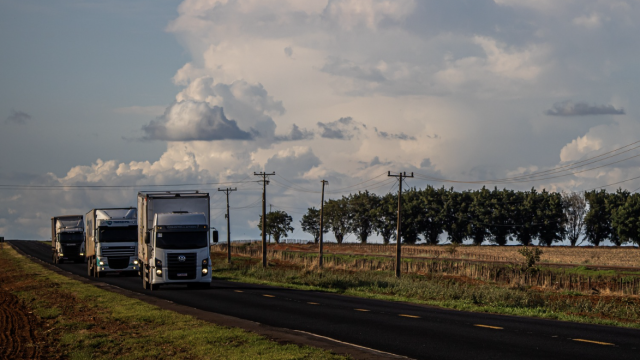
What is the future of biofuels with the advance of electrification?
11/05/23 - Leandro Gilio
Bioenergy | Low Carbon | Technology
Much of the automotive industry and governments see electric vehicles as the main path to decarbonization in transportation. But biofuels have evolved to become an alternative route that adds greater efficiency to this process.
Around 20% of CO2 emissions worldwide come from transportation, which is currently heavily dependent on fossil fuels (around 95% of vehicles worldwide still use this type of fuel). As part of an energy transition, several countries have adopted highly restrictive measures regarding emissions of this type.
Norway intends to ban the sale of combustion-powered vehicles by 2025. The United Kingdom, India and Sweden have set similar targets for 2030. China, the United States, Japan and the European Union have set zero-emission targets for vehicles sold from 2035 onwards. In this sense, the automotive industry has been preparing and betting on electrification as the predominant solution.
Currently, there are four types of electrified vehicles (EVs) on the market : the hybrid electric vehicle (HEV) , in which the combustion engine charges the electric motor and works in conjunction with it; the plug-in hybrid (PHEV) , in which the combustion engine and an electric motor work together, but the latter is charged externally; the 100% battery electric vehicle (BEV) , which uses only external charging and batteries; and, still under development, the fuel cell electric vehicle (FCEV) , which uses hydrogen as a source to generate the energy needed for an electric motor.
Electrification has been treated in the industry as a path of no return, but the real potential of EVs for decarbonizing transportation on a global level must be assessed with caution. First, there is the high demand for mineral inputs for battery production, which imposes a limit on battery production. In addition, the high production cost of EVs, the lack of autonomy of the vehicles and the still nascent charging network are practical limiting factors to the widespread use of these vehicles — which is aggravated in transportation vehicles. In the more specific case of FCEVs, the use of hydrogen as a fuel is still complex, including from a logistical point of view, requiring high technology to avoid risks in use.
But the most critical point regarding electrification is precisely the source of the energy that allows the vehicles to be recharged. When the source is fossil, non-renewable or with high levels of emissions — such as a coal plant, for example — the electrified vehicle does not achieve its main objective, which would be to avoid emissions, when considering the complete cycle, from the production of the energy.
According to a study conducted by the Stellantis group, considering the entire fuel/energy production cycle up to the vehicle's own emissions (well-to-wheel), over a distance of approximately 240 kilometers, a company vehicle fueled with Brazilian gasoline (27% ethanol) emits approximately 60,64 kg of CO2 equivalent. When a corresponding vehicle uses 100% hydrated ethanol, emissions drop to 25,79 kg of CO2eq. In the case of a 100% electric vehicle (BEV), when charged using energy in the European energy matrix model, emissions are 30,41 kg of CO2eq; but in the case of the Brazilian energy matrix (highly concentrated in renewables), emissions are 21,45 kg of CO2eq. In other words: a BEV vehicle does not always fulfill its decarbonization role in a truly efficient manner. This data also explains Brazil's “delay” in the electrification process, given that we already have the alternative of ethanol.

When it comes to emissions, biofuels can make a significant contribution. Hybrid models (HEV and PHEV) reduce emissions by almost 60% when they are flex-fuel and fueled with ethanol. Furthermore, biofuels have the potential to expand decarbonization with other types of uses that have been developing more recently.
One of the most promising is the use of ethanol to obtain green hydrogen, which can power fuel cell vehicles (FCEV). Studies by Unicamp and USP, together with the automotive and biofuel industries, have been seeking to solve the logistical problem of hydrogen, generating the gas from ethanol directly at gas stations or even inside cars. The use of biofuels in aviation and maritime transport is also becoming a reality, avoiding emissions in types of transport in which electrification is not efficient due to low battery autonomy.
But it's not only in the development of fuels and transportation technologies that there is evolution. Production models, both agricultural and industrial, in the area of biofuels have also been improving, seeking lower gas emissions, greater utilization of biomass throughout the process, and integrated systems. Good examples are integrated food and energy production systems (IFES) , which are efficient in decarbonization through land use and also in protecting food security; lignocellulosic ethanol , produced from bagasse and straw; biogas produced from vinasse; biomaterials; among other developments that are already a reality in Brazilian production units. All these possibilities can produce an even greater impact on mitigating gas emissions, especially when considering that there are large areas of degraded land with agricultural potential worldwide, mainly in tropical countries, that could also be used for bioenergy production.
It can therefore be seen that biofuels contribute and may increasingly contribute to efforts to decarbonize transport. However, it is important to understand this potential and ensure that governments and industries do not consider biofuels as a “niche solution” but rather as a central piece in a joint strategy with electrification in the energy transition, so that the various technologies can converge towards greater efficiency in terms of emissions.
Recommended readings:
Global Policies (Mandates) for Electrification (IEA)
* Use this material as a reference freely.
All Agro in Data graphs and data are available for use. You have permission to use, distribute and reproduce these contents in any medium (graphs and data are open to embedding), as long as sources and authors are credited.
Data produced by third parties and made available on Agro in Data are subject to the license terms of the original authors. We will always indicate the original source of the data in the documents made available, and it is the user's responsibility to always verify and cite the original sources.
Are you already following our official channels? Click and follow our WhatsApp channel , follow us on LinkedIn , and subscribe to receive our bi-weekly newsletter . Stay updated with research and knowledge on global agribusiness issues.
GLOSSARY
EV comes from the English acronym “Electric Vehicle”, which relates to any vehicle powered, to some degree, by electric motors, which may or may not be combined with combustion engines.
HEV is an acronym for “Hybrid Electric Vehicle” which refers to vehicles that combine an electric motor and an engine. There are hybrids in which the combustion engine powers the electric motor and also those in which the electric motor and combustion engine work together.
PHEV comes from the acronym in English “Plug-in Hybrid Electric Vehicle”, which refers to vehicles that combine a combustion engine and an electric motor, but differs from the traditional hybrid in that it is charged externally (not charged by the combustion engine)
BEV comes from the English acronym “Battery Electric Vehicle”, which defines vehicles powered entirely by batteries, charged externally (in sockets or electric charging stations, for example.
FCV comes from the acronym in English for “Fuel-Cell Vehicle”, it refers to the use of gaseous fuels (generally hydrogen) in vehicles in “engines” (fuel cells) that carry out the chemical reaction that results in the generation of electrical energy and water.
FCEV stands for “Fuel-cell Electric Vehicles”, which are vehicles that use hydrogen and fuel cells to charge an electric motor, which effectively moves the vehicle.
It is ethanol produced from plant-based cellulose raw materials, through the breakdown or hydrolysis of the lignocellulose molecule and subsequent fermentative conversion of the carbohydrates into ethanol. It is generally produced in plants from residues from the production of common ethanol (1st generation), such as bagasse and sugarcane straw, but it can also be produced from other sources of cellulose biomass.
IFES stands for “Integrated Food Energy Systems” and deals with the integration of energy production with food, in the same production area. It is a way of intensifying production in an area, which can combine the production of bioenergy inputs with the production of temporary crops, forests and livestock. This type of production model helps to reduce emissions, optimize land use and also minimizes arguments that oppose the production of bioenergy with food.
Read too

05/02/26 | Climate and Environment
Why are animal health and sustainability inseparable in Brazilian livestock farming?
Increased productivity and the expansion of international markets reinforce the need to integrate animal health, sustainability, and climate resilience in agriculture, and this can already be seen in cattle farming.