New EU rule overturns residue limit for agricultural inputs used by Brazil.
16/09/26 - Bruno Capuzzi
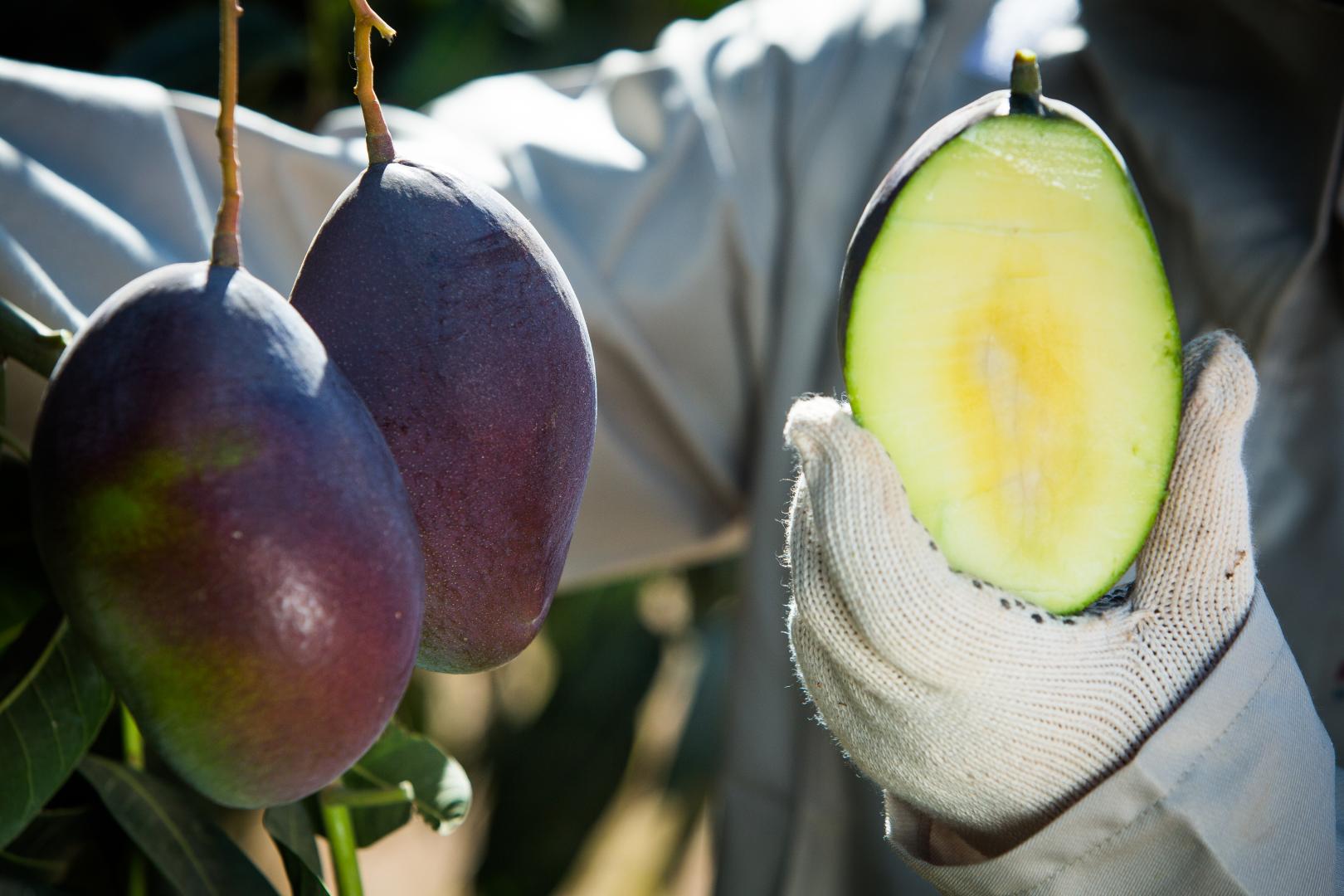
Photo by Wenderson Araújo/Trilux | CNA/Senar System
The detection of pesticide residues not registered in Europe could prevent the shipment of agricultural products such as mangoes, papayas, citrus fruits, coffee, and soybeans.
European Union Regulation 2026/1546 of July 8, 2026, removed the tolerance limits for thiophanate-methyl residues. This substance is a significant agricultural input for Brazil, used in the production of crops such as soybeans, coffee, cotton, beans, corn, and fruits, among others. In practice, shipments will be rejected if the laboratory detects any residue, even at levels currently considered safe.
In 2025, Brazil sold US$16,8 billion worth of agricultural products to the European Union, mostly coffee and soybeans. However, the dependence on the European market is greater for fruit: Europe bought 70% of the mangoes and 75% of the papayas that Brazil exported worldwide. For mangoes, papayas, oranges, grapefruits, and tangerines, the measure has been in effect since July 29, 2026, without an adaptation period. For other products, including lemons and limes, it will only apply from January 29, 2027.
Thiophanate-methyl, benomyl and carbendazim, the three substances covered by the regulation, are not registered for use in the European Union, but their residues were tolerated on import as long as they were below limits considered safe, the Maximum Residue Limits (MRLs). The legal basis is Article 14(2) of Regulation (EC) 396/2005 , which allowed setting the limit based on good agricultural practice authorized in the exporting country or the international limit of the Codex Alimentarius.
A simplification package still under consideration ( COM(2025) 1030 ) proposes eliminating the MRL (Maximum Residue Limit) for other substances based on intrinsic hazard criteria, such as carcinogenicity, mutagenicity, reproductive toxicity, and endocrine disruption, even when the current limit is safe for the consumer. If approved, the instrument will extend this logic to substances such as cyproconazole and mancozeb, inputs in the Brazilian production of coffee, cotton, sugarcane, soybeans, corn, and fruits.
The logic behind this change is part of a broader movement towards strategic autonomy within the European Union, which has been resorting to unilateral measures and shifting the focus from product requirements to the production process. In addition to the changes in MRLs (Maximum Residue Limits), there is the ban on antimicrobials in products of animal origin and regulations against deforestation.
Read too
Articles in newspapers and magazines | Insper Agro Global | 10/30/26
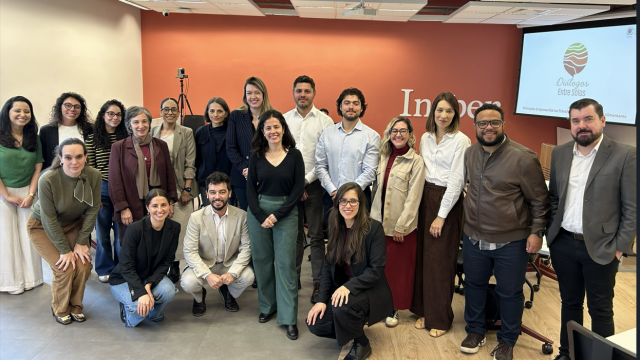
Insper and the UN Global Compact form a partnership to promote sustainable food systems.
Cooperation involves Insper Agro Global and Insper Metricis in the Soil Dialogues and foresees technical contribution to a document of business principles.
Articles in newspapers and magazines | Estadão | 18/10/26
Between Washington and Beijing, Brazil's interest
Food, energy, and minerals give the country bargaining power with the two superpowers.
Articles in newspapers and magazines | Estadão | 04/10/26
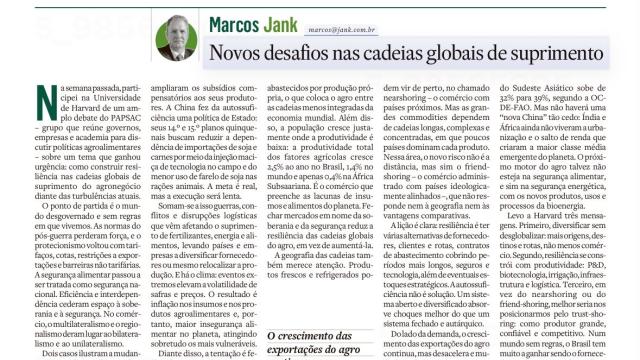
New challenges in global supply chains