Brazil achieves foot-and-mouth disease free status without vaccination
04/06/25 - Victor Martins Cardoso

Brasilia Agency
The result opens up the possibility of new markets for Brazilian beef exports, but also brings challenges and responsibilities for the livestock sector
Last Thursday, May 29, the World Organization for Animal Health (WHO) granted Brazil the status of an area free of foot-and-mouth disease without vaccination. In May of last year, the federal government had already made the same recognition, but the international approval came only one year after the end of vaccination of the Brazilian herd. In total, more than 244 million cattle and buffaloes stopped being vaccinated against the disease, consolidating a prevention process that began more than 50 years ago.
The title came eight years after the reformulation of the PNEFA (Strategic Plan of the National Foot-and-Mouth Disease Program), which aimed to expand zones free of the disease in the national territory without vaccination. Brazil has not recorded any cases of the foot-and-mouth disease virus for almost twenty years and, since 2018, the country has been considered by the organization as a foot-and-mouth disease-free zone, but with vaccination.
The new health certificate is seen by the sector as a valuable achievement for opening new international markets for Brazilian beef. As some of the largest importers of the protein in the world, including Japan and South Korea, buy only from areas free of foot-and-mouth disease without vaccination, the new status should serve as a strategic asset for negotiating the opening of more profitable markets.
In this context, the achievement is already beginning to generate concrete movements. According to Abiec, countries such as the Philippines and Indonesia responded to the WHO announcement by showing immediate interest in importing beef offal from Brazil. For years, Brazil has been trying to open the Japanese and South Korean markets to its beef, but the sanitary status recognized by the WHO has not allowed it to do so. The expectation is that negotiations will be facilitated after the organization's recognition.
In addition to new markets, the removal of mandatory vaccination against foot-and-mouth disease may result in cost reductions for the sector. The estimated annual costs of vaccination for Brazilian livestock, which include the purchase of vaccines, hiring of veterinarians and sanitary management, total approximately R$500 million per year, according to data from Mapa (Ministry of Agriculture and Livestock). In addition, the side effects of immunization may also generate costs for the activity, according to data from PNEFA 2017-2026.
However, the international certification also brings new challenges and responsibilities. The new health status, despite attesting to the country's commitment to combating foot-and-mouth disease, does not indicate a complete absence of the risk of reintroduction of the virus into the target population. In cases where the suspension of vaccination is a mandatory requirement for maintaining the international certificate, the risk of disease records increases.
A similar scenario occurred in Central Europe at the beginning of the year. Germany, Hungary and Slovakia, countries belonging to the European Union and considered by the WHO for years to be free of foot-and-mouth disease without vaccination, registered new cases of the disease, something that had not occurred for more than three decades. The episode led to the closure of their borders and put the health status of the European bloc in question.
Brazil is currently the world's largest exporter of beef. In 2024, the country exported around 2,9 million tons, equivalent to US$12,8 billion, to 160 countries. By assuming this important role in the global meat trade, the Brazilian cattle industry also has a huge responsibility to ensure the necessary health protocols to prevent the reintroduction of the virus. The mere notification of a case of foot-and-mouth disease, even if it does not spread to the rest of the herd, can lead to the immediate closure of key markets for Brazil, as occurred in the cases of mad cow disease in 2023 and avian flu in early May.
The PNIB (National Plan for the Identification of Cattle and Buffaloes), launched at the end of last year, is in line with this effort (for more details, we recommend reading “PNIB: individual tracking of cattle and the challenges of implementation”). By enabling the precise and individual identification of animals, authorities are able to carry out localized containment of health outbreaks. This significantly reduces the risk of widespread trade blockades, as well as the risk of dissemination in the production chain.
In short, achieving the status of an area free of foot-and-mouth disease without vaccination with the WHO represents a historic milestone for Brazilian livestock farming, consolidating decades of health efforts and opening doors to more demanding and possibly more remunerative international markets. However, this achievement will require constant monitoring, strengthening of traceability systems and an ongoing commitment to rigorous health practices, as is currently done, with the aim of preserving the credibility gained and ensuring the growth of Brazilian beef exports.
Are you already following our official channels? Click and follow our WhatsApp channel , follow us on LinkedIn , and subscribe to receive our bi-weekly newsletter . Stay updated with research and knowledge on global agribusiness issues.
Read too
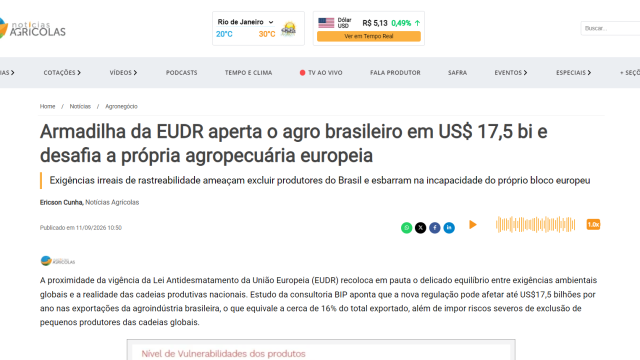
News | Agricultural News | 09/11/26
The EUDR trap tightens the Brazilian agricultural sector's grip by US$17,5 billion and challenges even European agriculture itself.
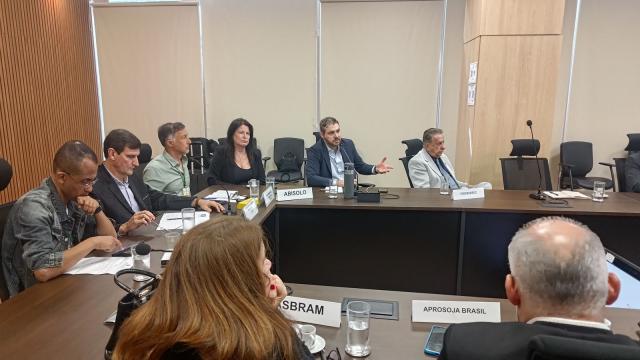
News | Insper Agro Global | 08/28/26
José Pimenta participates in a debate on geopolitics and the competitiveness of agricultural inputs.

News | Insper Agro Global | 05/19/26
Insper Agro Global announces new collaborators and expands its operations in geopolitics and international trade.
José Pimenta Jr. and Bruno Capuzzi join the research team, strengthening research on topics related to international trade, public policy, and global regulatory governance.