First case of bird flu on a commercial farm in Brazil raises alarm and reactions in the international market
19/05/25 - Leandro Gilio | Victor Martins Cardoso | Luiz Arthur Chiodi Pereira
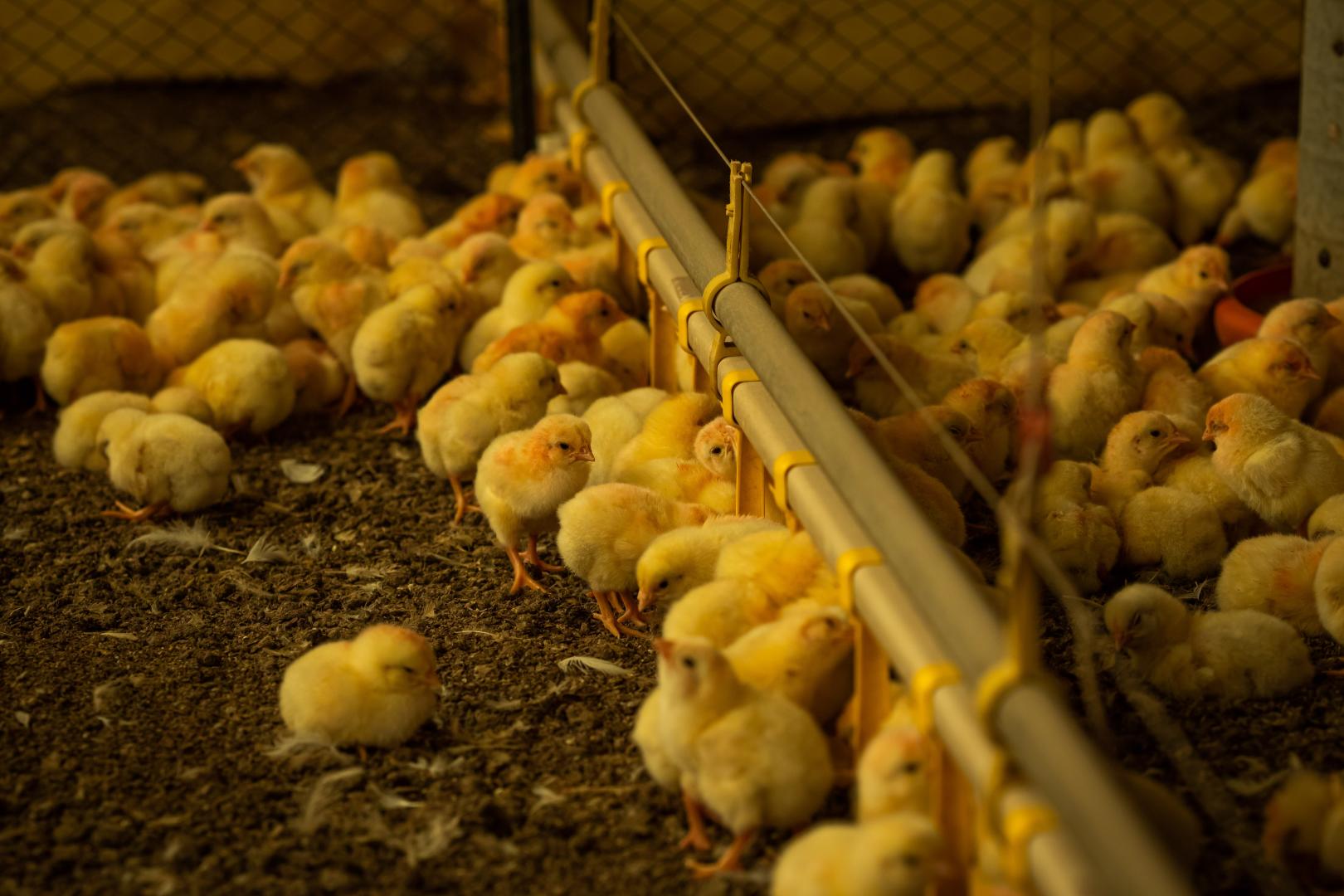
Photo by Wenderson Araújo/Trilux | CNA/Senar System
Confirmation of a case of the disease in commercial production led to the immediate suspension of imports of Brazilian chicken meat by several countries and requires a rapid response from health authorities.
MAIN INFORMATION
- Ministry of Agriculture confirmed the 1st case of highly pathogenic avian influenza on a commercial farm in Brazil, in Montenegro (RS), on May 15;
- The area in Montenegro-RS was isolated, remaining birds were eliminated and an investigation is being carried out within a 10km radius of the identification of the outbreak, creating a containment and protection zone for the disease and following protocols from the World Organization for Animal Health (WHO);
- The identification caused the immediate suspension of imports by China, the European Union and several other countries. The suspension depends on agreements, rules and restrictions of each market with Brazil. There are protocols for regionalization of avian flu embargoes in other countries;
- With the suspension of markets, even if it is regionalized, there is a possibility of an imbalance in the supply and demand of the product, resulting in a reduction in prices at first;
- The risk of bird flu transmission to humans is low, associated with people who have handled sick animals. Sick animals are slaughtered to prevent the virus from spreading to healthy livestock. In the case of consumption of chicken meat or eggs, there is no risk of transmission, provided they are prepared properly.
On May 15, 2025, the Ministry of Agriculture and Livestock (MAPA) registered the detection of the first outbreak of the highly pathogenic avian influenza virus (avian flu, H5N1) (HIVAP) on a commercial farm in Brazil, in Montenegro - RS. The country was one of the few in the world that maintained the differentiated health status of never having registered a case of avian influenza in a commercial production. However, because it is a highly resistant virus, spread mainly by migratory wild birds, and that had been spreading to several countries in Asia and the Americas - including in countries neighboring Brazil since 2022, such as Argentina, Uruguay, Bolivia, Chile, Ecuador, Peru and Venezuela -, the occurrence of some record in Brazil was considered imminent, even though the country has a strong ongoing health surveillance plan, which seeks early detection of the disease by monitoring migratory bird sites and carrying out periodic collections of materials for identification. In 2023, cases were detected in wild birds in the country and contingency measures were quickly adopted, with no record of impacts on commercial production at that time.
With this case confirmed, MAPA declared a state of animal health emergency for 60 days in the municipality of Montenegro-RS, within a ten-kilometer radius of the location where the virus was detected - 17 birds from the farm where it was identified were killed and slaughtered. A health monitoring and surveillance plan is in place in the country to control possible new cases and isolate the region, creating a containment zone and following protocols from the World Organization for Animal Health (WHO). Sanitary and disinfection barriers were implemented, in addition to extensive testing in the region and suspected cases.
Even with the measures adopted, restrictions have already been imposed on Brazilian chicken meat. Brazil is currently the largest exporter of chicken meat in the world, responsible for 36% of all chicken meat exported globally (4,9 million tons in 2024), reaching 169 countries. Important markets such as China, the largest export destination (14% of all demand for Brazilian chicken meat), and the European Union (10%) have suspended purchases of chicken meat from all of Brazil for 60 days. Other countries have restricted only chicken meat from the region, such as Japan (9%) and Saudi Arabia (8%).
List of countries that have suspended the import of Brazilian chicken meat*
| All national territory | South Africa Argentina Bolívia to Canada Chile China South Korea Work shirts / service shirts Jordania Iraque Malasia Morocco Mexico Paquistão Peru Dominican Republic Sri Lanka Timor-Leste European Union Uruguay |
| Rio Grande do Sul |
Bahrain |
| Only to the city of Montenegro-RS |
Saudi Arabia |
Source: Ministry of Agriculture and Livestock and various media outlets. *Note: information up to May 21, 2025.
Main destinations for Brazilian chicken meat exports in 2024 (in billions of dollars and percentage of total)
Source: MAPA (2025).
The reaction of countries depends on agreements, rules and restrictions in each market. These immediate suspensions can immediately unbalance the chicken market in the country, causing prices to fall and creating a tendency for oversupply. It is important to note that the risk of transmission of avian flu to humans is low, associated with people who have handled sick animals. Infected birds are slaughtered to prevent the virus from spreading to healthy flocks. In the case of consumption of chicken meat or eggs, there is no risk of transmission if prepared properly. In addition, birds from farms where avian flu has been reported are immediately slaughtered and their meat is not sold.
Despite the lockdowns, the situation can be managed shortly. With the spread of the disease in several regions, there is now a relaxation of the rules in some countries, and there are no large consumer markets that only buy from countries free of the disease - notably due to the spread in important producer markets, such as the USA and the European Union. China itself continues to buy chicken meat from the USA, even though avian flu has been occurring on farms in the country since 2017 - Figure 1 and Figure 2. In the USA alone, since the virus was detected in commercial birds, just over three years ago, more than 168 million birds have been slaughtered or killed by the disease.
Imports of Chicken Meat from China by main supplier countries, between 2005 and 2024 (in thousands of tons and percentage share of total imports)
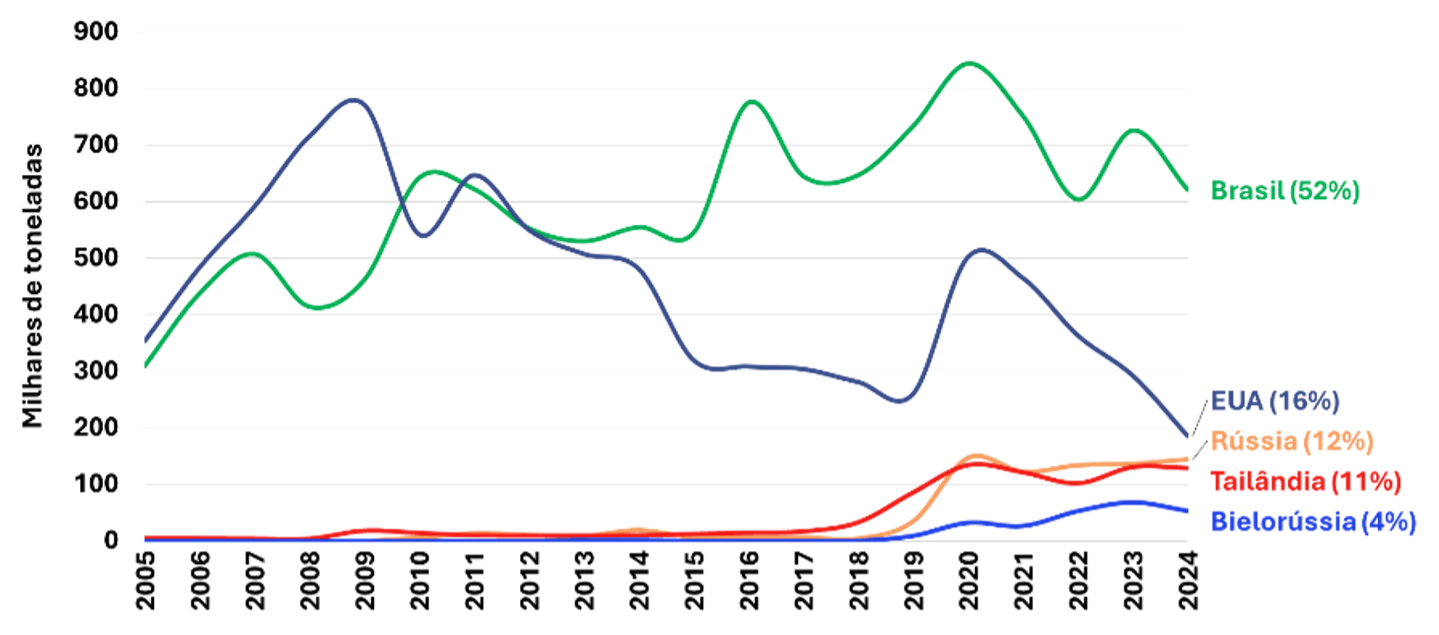
Source: Trade Data Monitor (2025). Note: calculation includes China and Hong Kong.
Number of official notifications of avian influenza in poultry by country, 2022 to 2025*
Source: World Organization for Animal Health (WOAH). *note: until May 20, 2025.
Instead of completely banning imports from a country where an outbreak has been recorded, countries tend to veto purchases only from infected areas. When an outbreak occurs in commercial poultry, the birds affected and exposed to the disease are slaughtered and the area isolated, creating containment zones - as Brazil has been dealing with the case, following WHO rules. As long as it is demonstrated that Brazil has the capacity and is effectively able to isolate this area and meet WHO requirements, markets may be reopened through the concept of zoning or regionalization.
If there are no new cases registered, whether in Montenegro-RS or in other regions, within 28 days after the first registration and the effectiveness of control and containment actions is proven, Brazil may once again declare itself as a disease-free zone and request, through negotiation, the reopening of markets. Therefore, everything will depend on trade relations and negotiations between partners and the level of confidence that the country will be able to convey to importers in terms of the health control exercised in Brazil, in its territory, in the coming days.
Are you already following our official channels? Click and follow our WhatsApp channel , follow us on LinkedIn , and subscribe to receive our bi-weekly newsletter . Stay updated with research and knowledge on global agribusiness issues.
Read too
News | Agricultural News | 09/11/26
The EUDR trap tightens the Brazilian agricultural sector's grip by US$17,5 billion and challenges even European agriculture itself.

News | Insper Agro Global | 08/28/26
José Pimenta participates in a debate on geopolitics and the competitiveness of agricultural inputs.


News | Insper Agro Global | 05/19/26
Insper Agro Global announces new collaborators and expands its operations in geopolitics and international trade.
José Pimenta Jr. and Bruno Capuzzi join the research team, strengthening research on topics related to international trade, public policy, and global regulatory governance.