Course prepares professionals to deal with the risks of commercialization in agribusiness
11/08/25

The program, coordinated by Murilo Parada and Berenice Righi Damke, integrates strategic vision, pricing fundamentals, and the use of financial instruments, with practical application in agro-industrial chains.
In October, Insper Agro Global is offering a three-day in-person immersion course on Risk Management in Agribusiness Marketing , aimed at professionals working or aspiring to work in the sector, particularly in the areas of marketing, risk management, logistics, trading, and finance. Coordinated by Berenice Righi Damke and Murilo Parada, the program brings together experts with extensive market experience to provide a comprehensive overview of the factors influencing prices, margins, and strategies in agribusiness, as well as tools to mitigate risks and increase the predictability of results.
The course will cover essential topics for the efficient marketing of agricultural commodities and financial risk management. Key topics include: analysis of Brazilian agribusiness's insertion into the international market and the impacts of geopolitical issues; marketing and pricing strategies; costing, financing, and investments in the sector; the influence of logistics on costs and margins; pricing and the use of derivatives for financial protection; credit and financing management; case studies on the impact of derivatives; and practical marketing strategies in supply chains such as soybeans, corn, sugar, and biofuels.
For Murilo Parada, an executive with over 20 years at the Louis Dreyfus Company—where he served as CEO in Brazil and Chief Sustainability Officer Global—and currently a strategic advisor at Sail Investments, the course was conceived after identifying a gap in the Brazilian market. "No institution offered a truly comprehensive program on agribusiness marketing, integrating fundamentals, strategic vision, and practical application. Our idea was to bring together experienced professionals to cover the key elements that affect prices and margins, creating a holistic view of risk management," he states.
According to him, understanding the international landscape is essential for those working in Brazilian agribusiness, a heavily export-oriented sector subject to variables such as climate, exchange rates, tariffs, and infrastructure. "Brazil is a price-setter in several agro-industrial chains. This brings responsibility and, at the same time, opportunities for those who know how to navigate such a dynamic market," he observes.
Tools to reduce risk and protect margins
Berenice Righi Damke, a professor at Insper and founding partner of Damke Consultoria e Treinamento, specializing in interest rate, currency, and commodity derivatives, emphasizes that risk management goes beyond knowledge of the physical market: it requires mastery of available financial instruments. "In agribusiness, it's common for costs to be defined months before revenue is realized. Derivatives allow us to set sales or purchase prices in advance, connecting the physical market to the financial market and reducing exposure to price and exchange rate fluctuations," she explains.
She emphasizes that, although large companies already use these tools, small and medium-sized producers can also benefit. "On B3, for example, soybean or corn futures contracts can be traded with just 450 bags. This isn't a resource restricted to large exporters. Accessibility is increasing and operating costs are decreasing, allowing more producers to use hedging as margin protection."
The course will cover the four main types of derivatives: futures contracts and options—traded on exchanges such as B3, Chicago, and ICE—and forwards and swaps, offered by banks. While futures serve as a price reference in the trading process, options function similarly to insurance, granting the buyer the right to buy or sell at a previously established price. Swaps, more common for interest rates and currencies, are relevant in agribusiness because many companies finance themselves in dollars.
The exchange rate component will be addressed diligently, considering the dollar's weight in the sector. "Agribusiness revenues and costs are heavily dollarized. A well-structured exchange rate hedge prevents exchange rate fluctuations from compromising margins or results. This applies to both exporters and those purchasing imported inputs," explains Berenice.
Practical application with market experts
The course will feature guest experts to delve deeper into specific issues. One will address the impact of logistics on pricing, covering road, rail, waterway, and port transport. Another will discuss corporate financing strategies, evaluating decisions about debt in reais or dollars and different types of credit in the sector. Real-life pricing and marketing cases will also be presented, allowing participants to understand how to apply risk management concepts and tools in practice.
Murilo Parada emphasizes that the course is not limited to addressing current issues, such as the recent global trade disputes involving the "tariff hike" imposed by the Donald Trump administration. "The objective is not to offer solutions solely to the current problem, but to train professionals capable of navigating the structural complexity of agribusiness. Tariffs are just one risk; there are many others—exchange, logistical, climate, regulatory—that require technical preparation and a systemic vision."
For Berenice, one of the course's distinguishing features lies in its unique combination of topics and professional profiles. "Very few programs seamlessly combine trading, logistics, and the use of derivatives specifically for agricultural commodities, always with faculty and guest speakers who work in this market on a daily basis," she states. Murilo adds that the diversity of cases and the integration of different specialties make the course relevant for any link in the chain. "We want participants to leave with practical tools and a solid strategic vision to operate safely and efficiently."
The course also promises a valuable networking experience, bringing together professionals from different segments of the agribusiness chain. "We hope the exchange between participants will be as enriching as the class content. The interaction and debate fostered, especially through the workshops offered throughout the course, help to consolidate the learning experience," concludes Berenice.
The Risk Management in Agribusiness Marketing course will be held in person at Insper's campus in São Paulo from October 9th to 11th. Don't miss it!
More information and registration at this link.
Are you already following our official channels? Click and follow our WhatsApp channel , follow us on LinkedIn , and subscribe to receive our bi-weekly newsletter . Stay updated with research and knowledge on global agribusiness issues.
Read too
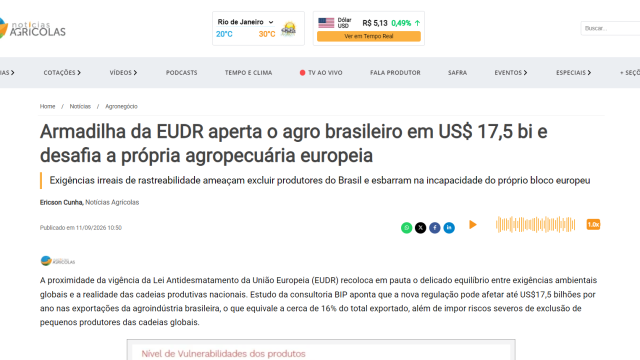
News | Agricultural News | 09/11/26
The EUDR trap tightens the Brazilian agricultural sector's grip by US$17,5 billion and challenges even European agriculture itself.
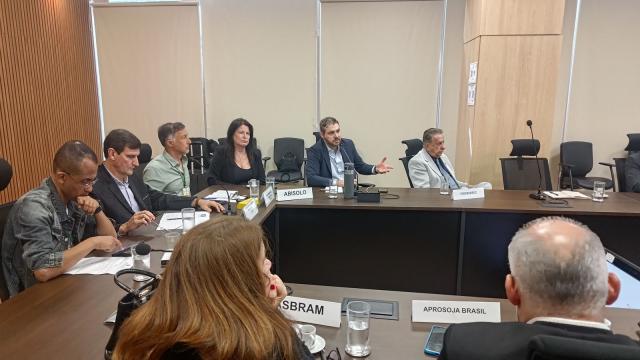
News | Insper Agro Global | 08/28/26
José Pimenta participates in a debate on geopolitics and the competitiveness of agricultural inputs.
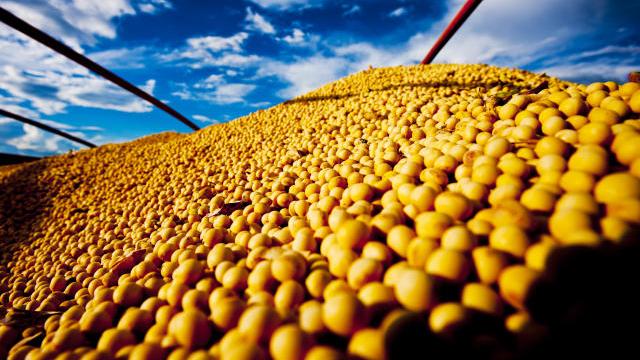

News | Insper Agro Global | 05/19/26
Insper Agro Global announces new collaborators and expands its operations in geopolitics and international trade.
José Pimenta Jr. and Bruno Capuzzi join the research team, strengthening research on topics related to international trade, public policy, and global regulatory governance.