The “easy solutions” trap in combating rising food prices
23/06/25 - Leandro Gilio
Food Security | Politics | Macroeconomics | Social Development
The rise in food costs directly affects the most vulnerable population, requiring responses that challenge the formulation of public policies
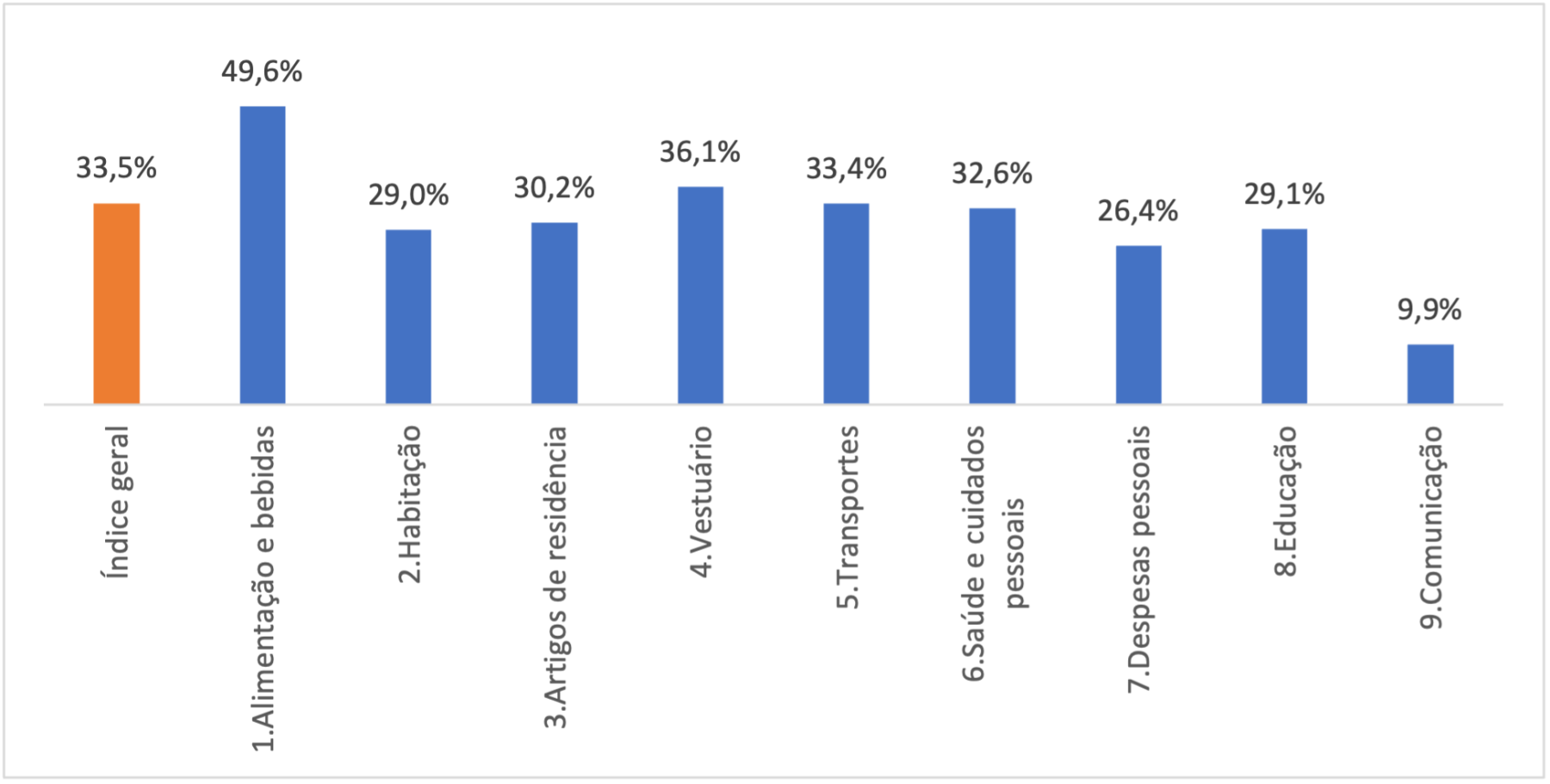
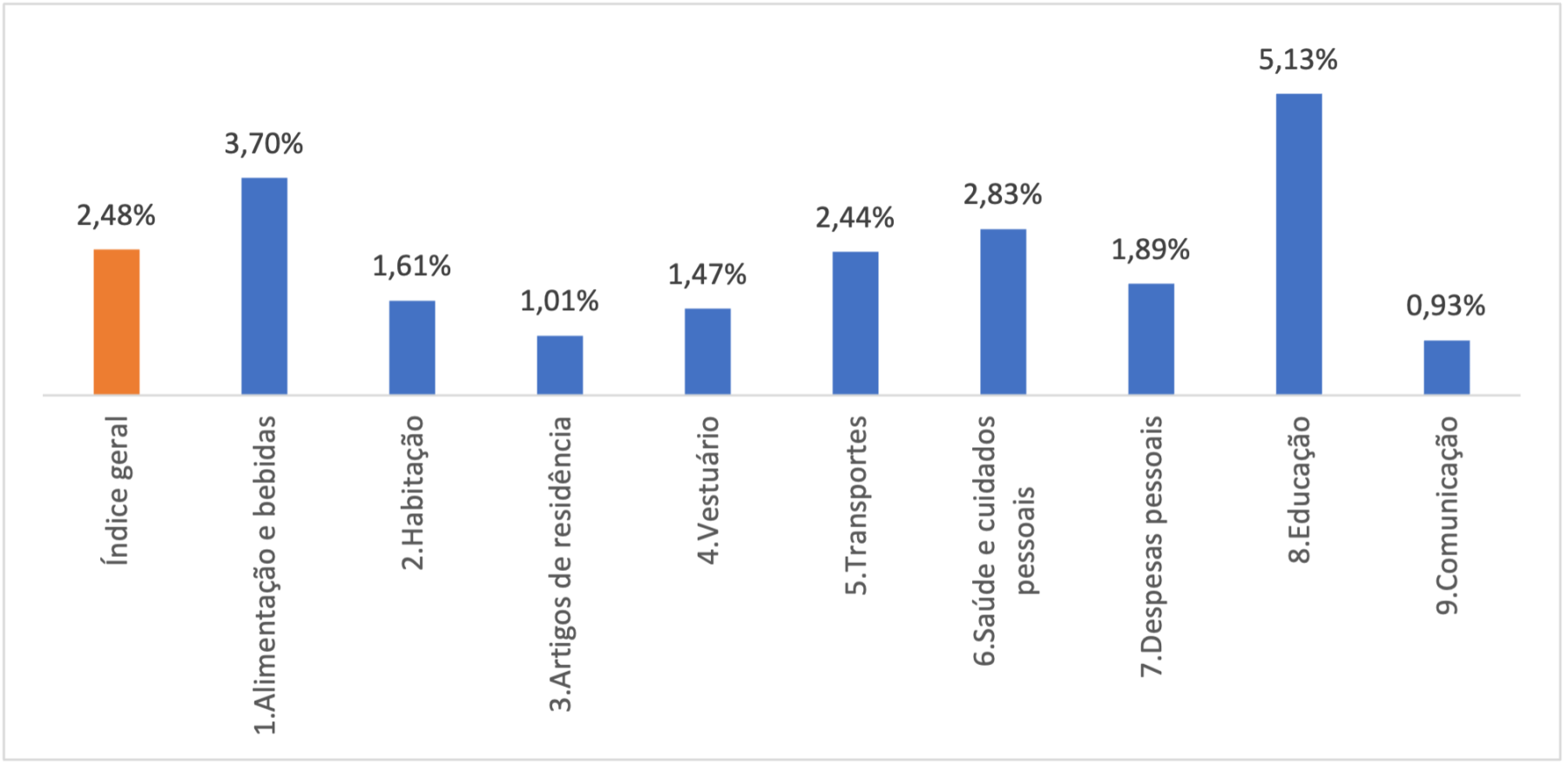
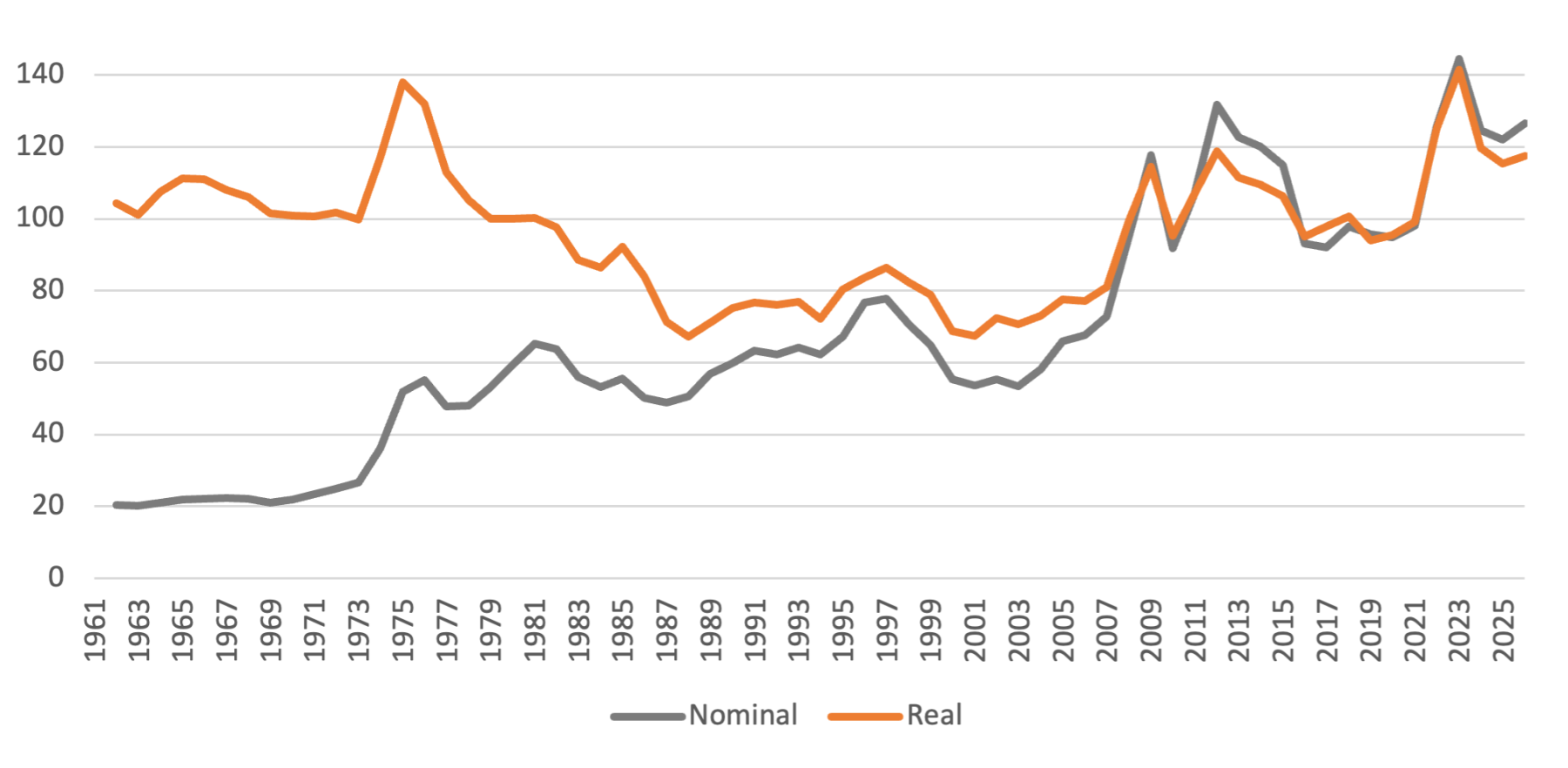
In addition to the occasional increases in the prices of coffee and eggs, the general rise in food prices continues to be a concern and impact the income of the country's population. And this growth is not a concern exclusive to Brazil, but a phenomenon that has been intensifying globally. According to data from the IBGE, in the Broad National Consumer Price Index (IPCA), the “food and beverage” group accumulated growth 48% higher than the general inflation index in Brazil (about 16 percentage points higher), in the accumulated period between 2020 and 2024 (Figure 1). Considering only the accumulated period from January to May 2025, the group still remains above the general index, being the second with the highest increase in the period (behind only “education”, a group that usually has adjustments at the beginning of the year) — Figure 2. Globally, according to data from the FAO, between 2020 and 2024, food prices had real growth (above inflation) of almost 20% (Figure 2).
Broad National Consumer Price Index (IPCA), value of the general index and subgroups, in accumulated values from January 2020 to December 2024
Source: prepared based on data from IBGE (2025)
Broad National Consumer Price Index (IPCA), value of the general index and subgroups, in accumulated values from January 2025 to May 2025
Source: prepared based on data from IBGE (2025)
FAO Food Price Index, annual values, general, nominal and real index, from 1961 to May 2025 (base 2014-2016=100)*
Source: prepared based on data from FAO (2025) *Note: 2025 value considers the May 2025 index.
Factors such as population growth, rapid urbanization and global income growth, when disconnected from production, progressively contribute to pressure on demand and the increase in food prices in general. However, more recent issues, such as the Covid-19 pandemic, the intensification of wars, trade protectionism, and climate and health crises, have accelerated this process, challenging governments to take actions aimed at ensuring food security in their countries.
Throughout history, various policies have been and are adopted to regulate, shape or support food production, consumption and trade. However, in times of crisis, actions are often accelerated and sometimes implemented without further discussion of the results they can produce in a complex system such as the food system. History shows that there is no simple solution, and that policies that aim to address issues such as protecting consumers, regulating prices, increasing national supply, supporting farmers' income and protecting production, among other central objectives, sometimes also generate harmful effects, often contrary to the initial idea, and can further aggravate delicate situations.
In Brazil, concerns about food prices became more widespread in the 50s. From then until the 70s, the problems of high food prices were seen as being associated with the issue of low food supply (and, consequently, supply) for the population that was increasingly moving to cities in a country that was rapidly industrializing and urbanizing — until then, Brazil had been a net importer of food. Public policies were largely focused on agri-food production and involved various interventions (some of which will be specified below), which included mechanisms to encourage research and agricultural technology, highly subsidized financing, incentives for migration and the establishment of farmers in new areas, and even greater trade regulation.
In the 80s, the government began to have difficulty financing policies aimed at production, promoting actions more focused on intermediation in price regulation and supply control. In the 90s, with major inflationary difficulties and problems in policy management (and financing), the sector became increasingly deregulated, with actions more focused on access to food for the low-income population (such as income transfer programs).
Between successful and unsuccessful policy implementation, several lessons have emerged from this process — many of which have been exhaustively studied and documented in scientific literature. However, at a time of rising food prices, as we are seeing today, old options are once again put on the table, as if we had no past references regarding their effects. And the greatest risk, in general, is in short-termism.
In search of quick solutions, governments sometimes impose policies to control the relationship between supply and prices. These policies can be more direct in terms of prices, such as imposing price freezes or price caps, something that occurred in Brazil in the 80s and in Argentina in recent years, for example. Or they can be more indirect in terms of increasing the domestic availability of products, such as imposing tariffs or restrictions on exports — once again, Argentina has a recent example of adopting this policy, with the so-called “retenciones” — or reducing import tariffs on food. All of these policies have in common the undesirable result of discouraging domestic production (by reducing the margins received by producers), which ends up generating, at a later stage, a decrease in production and, consequently, more inflation and less domestic availability of products. In the case of reducing import tariffs, there are other variables that make it viable or not to import food, such as the exchange rate, the competitiveness of imported products and logistics costs, among others, which can make this measure simply ineffective.
More direct price control initiatives assume that agriculture would be the cause of the price increase and that producers would be benefiting from this inflationary process. However, it is important to also observe this relationship from the perspective of relative prices, that is, the relationship between the nominal evolution of prices paid to agricultural producers and prices paid to consumers, that is, inflation. Historically, studies show that there have been no increases in real prices paid to agricultural producers that justify the recent real increases in food and beverage prices paid to consumers, and that producers still systematically face unfavorable market conditions in terms of product and input prices (read more in “Agribusiness: Relative prices and inflation” - Barros and Castro, 2021) — a result that has only been sustained by the significant growth in productivity of Brazilian crops.
There is a slightly more diverse measure in terms of results — and also less “short-term” —, which is the policy of buffer stocks. In general, this type of investment by the country aims to guarantee supply and stabilize prices, especially in times of crisis or sharp increases. Several countries, such as China, the United States and some members of the European Union, adopt public stocks and stabilization policies with positive results — it is important to mention that these countries are also large importers of food, which justifies a greater concern with domestic availability. In the case of Brazil, the National Supply Company (Conab), officially created in 1991 but derived from other state institutions that existed since the 1940s, has previously played a stronger role in this regard. However, management problems, corruption and the ability to fulfill this function have been reducing the possibilities of having truly effective buffer stocks in Brazil. In addition, the high production of domestic surpluses, given that the country is currently a large net exporter of food, minimizes the need for or reduces the impact of this policy.
However, it is important to highlight the policies that are (or were) successful. Measures to stimulate production, from the simplest, such as tax reductions in the supply chain, to the most complex, such as investments in research, technology, logistics and facilitated lines of productive financing, generate significant results. The so-called “Green Revolution” in Brazil and subsequent productive developments, supported by public and private policies of productive investment that have been taking place in the country since the 60s, generated significant growth in production, which consequently resulted in productive surpluses and reduced food prices. This fact, combined with other issues, such as the evolution of Brazilian income, has caused the weight of consumer spending on food to gradually decrease over time, falling below that of other world economies with characteristics similar to Brazil.
Evolution of the share of selected expenditure groups in total expenditure
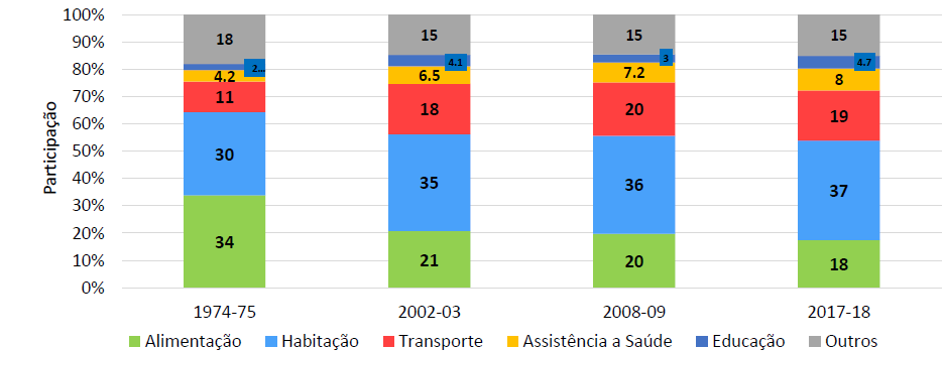
Source: Household Budget Surveys (IBGE, various years).
Participation of the food group in the total expenditure of the population: comparison between countries
Source: Our World in Data
The policies addressed so far have focused primarily on food production. However, food issues are closely related to access to food, which is intrinsically linked to social problems such as poverty and inequality, requiring an integrated approach that considers not only market dynamics but also social contexts. Addressing rising food prices requires a collaborative effort between governments, civil society and the private sector, aiming to implement effective and sustainable solutions, while avoiding the adoption of policies that could result in adverse consequences.
Historically, policies aimed at stimulating production and reducing costs have contributed most to overcoming price challenges and increasing food availability over the past half century. However, it often takes time for these policies to show results, well beyond four-year mandates. Agricultural development is a process that is constantly evolving, driven by a diversity of actors—producers, consumers, workers, policymakers, and entrepreneurs—who seek to improve conditions. And there are no easy, quick fixes to address problems such as more structural price increases. Transforming food systems therefore requires continuous evolution and planning of food policies.
Are you already following our official channels? Click and follow our WhatsApp channel , follow us on LinkedIn , and subscribe to receive our bi-weekly newsletter . Stay updated with research and knowledge on global agribusiness issues.
Read too
News | Agricultural News | 09/11/26
The EUDR trap tightens the Brazilian agricultural sector's grip by US$17,5 billion and challenges even European agriculture itself.

News | Insper Agro Global | 08/28/26
José Pimenta participates in a debate on geopolitics and the competitiveness of agricultural inputs.

News | Insper Agro Global | 05/19/26
Insper Agro Global announces new collaborators and expands its operations in geopolitics and international trade.
José Pimenta Jr. and Bruno Capuzzi join the research team, strengthening research on topics related to international trade, public policy, and global regulatory governance.